Ovulation Is Not the Finish Line: Hidden Fertility Barriers That Testing Can Uncover When Clomid Succeeds but Pregnancy Doesn't Follow
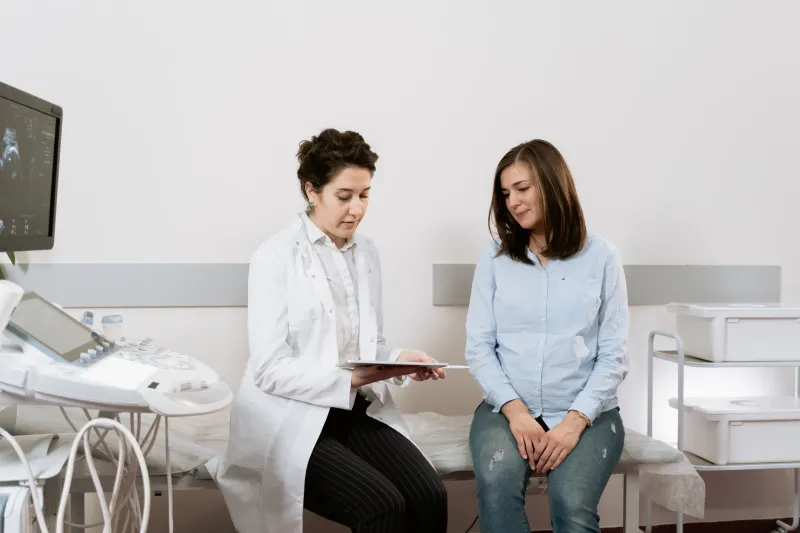
There is a particular kind of discouragement that settles in when your physician confirms ovulation cycle after cycle, your tracking methods align with the clinical data, and yet a positive pregnancy test never materializes. For women in this situation, the reassurance that "the medication is working" can begin to feel hollow. What is working, precisely, and what might still be going wrong?
This is the central paradox of Clomid therapy for a meaningful subset of patients. Clomiphene citrate performs its core function—stimulating follicular development and triggering ovulation—with reasonable reliability. But ovulation is only one event in a complex biological sequence. When that sequence breaks down at a later stage, standard monitoring may not detect the disruption at all.
Why Ovulation Confirmation Alone Is an Incomplete Picture
Most ovulation monitoring during Clomid treatment focuses on two endpoints: evidence of follicular maturation via ultrasound, and a post-ovulatory progesterone reading, typically drawn around cycle day 21. These measures confirm that an egg was released. They say very little about what happens next.
Conception requires not just ovulation but successful fertilization, early embryo development, timely transport through the fallopian tube, and implantation within a receptive uterine lining. A failure at any one of these stages produces the same clinical result—no pregnancy—but the underlying cause differs substantially. When physicians and patients focus exclusively on ovulation as the measure of success, the other steps in this chain may go unexamined for months or even years.
The Luteal Phase: A Frequently Overlooked Variable
Following ovulation, the corpus luteum—the structure left behind after a follicle releases its egg—produces progesterone to prepare the uterine lining for implantation. A luteal phase defect occurs when this progesterone output is insufficient, either in quantity or in duration, leaving the endometrium inadequately prepared to receive a fertilized egg.
The relationship between Clomid and luteal phase function is nuanced. In some patients, the medication supports progesterone production indirectly through its effect on ovulation. In others, the anti-estrogenic properties of clomiphene may actually interfere with endometrial development even when progesterone levels appear numerically adequate. This means that a day 21 progesterone reading within the "normal" range does not entirely rule out luteal phase insufficiency as a contributing factor.
More detailed hormonal profiling—including progesterone measurements taken at multiple points across the luteal phase rather than a single mid-luteal draw—can offer a clearer picture of corpus luteum function over time.
Uterine Receptivity and the Endometrial Environment
Among the most clinically significant and least discussed barriers in Clomid cycles is the effect the medication can have on the uterine lining itself. Clomiphene works by blocking estrogen receptors in the hypothalamus, which triggers the hormonal cascade that drives ovulation. However, estrogen receptors in the uterus are affected as well, and the result in some patients is an endometrium that is thinner or less structurally developed than what is needed for successful implantation.
A transvaginal ultrasound performed in the late follicular phase—typically just before ovulation—can measure endometrial thickness and assess its characteristic trilaminar pattern, both of which are associated with implantation success. Thickness below approximately 7 millimeters is frequently cited in reproductive medicine literature as a threshold below which implantation becomes significantly less likely.
When endometrial thinning is identified, clinicians may consider adjunct strategies such as low-dose vaginal estrogen supplementation, or may recommend transitioning to letrozole, which tends to have a more favorable effect on the endometrium in susceptible patients.
Structural Abnormalities That Imaging Can Reveal
Beyond the hormonal environment, physical characteristics of the uterus can impair implantation even when ovulation and fertilization proceed normally. Uterine fibroids that distort the endometrial cavity, endometrial polyps, intrauterine adhesions, and congenital abnormalities such as a uterine septum are all capable of interfering with embryo implantation without producing symptoms that would prompt investigation under standard monitoring protocols.
A sonohysterogram—an ultrasound performed with saline infused into the uterine cavity—provides a detailed view of the intrauterine environment that routine pelvic ultrasound cannot match. In some cases, a hysteroscopy, which involves direct visualization of the uterine cavity, may be warranted. These evaluations are not typically part of a first-line Clomid workup, but they become increasingly important when multiple ovulatory cycles have failed to result in conception.
The Male Factor: A Dimension That Cannot Be Assumed Away
It bears stating clearly: no evaluation of unexplained infertility in the context of successful ovulation is complete without a current, comprehensive semen analysis. Male factor infertility accounts for a substantial proportion of cases in which female ovulation is confirmed but pregnancy does not occur, and it is not always identified on initial testing.
Beyond standard semen parameters—count, motility, and morphology—there are more specialized assessments that may be relevant. Sperm DNA fragmentation testing examines the integrity of the genetic material within sperm cells. Elevated DNA fragmentation can impair fertilization and early embryo development even when conventional semen analysis results appear acceptable. This is an area where many couples discover a contributing factor that had previously gone undetected.
Fallopian Tube Patency: Confirming the Path Is Clear
For fertilization to occur naturally, sperm must travel through the fallopian tubes to reach the egg, and the resulting embryo must travel back through those same tubes to reach the uterus. Tubal obstruction or dysfunction, whether caused by prior infection, endometriosis, or other structural damage, can prevent this process entirely—regardless of how well ovulation has been induced.
A hysterosalpingogram, or HSG, is the standard diagnostic tool for assessing tubal patency. It involves injecting contrast dye through the cervix and imaging its passage through the reproductive tract under fluoroscopy. When tubal blockage is identified, the clinical pathway shifts meaningfully—typically toward assisted reproductive technologies rather than continued ovulation induction.
When to Advocate for a Deeper Evaluation
The general clinical guideline in the United States suggests that couples under 35 who have been attempting conception for 12 months without success should pursue a fertility evaluation. For women over 35, that threshold shortens to six months. For patients actively using Clomid, however, the calculus is somewhat different. If three to six ovulatory Clomid cycles have not resulted in pregnancy, that outcome itself is diagnostic information warranting a more thorough investigation.
Patients in this situation are well within their rights to request expanded testing from their treating physician. Specific questions worth raising include whether endometrial thickness has been assessed during the current treatment protocol, whether a sonohysterogram or HSG has been performed, whether a current semen analysis is on file, and whether a referral to a reproductive endocrinologist is appropriate.
Moving Forward With Clarity
The experience of ovulating successfully while remaining unable to conceive is genuinely disorienting. It can create the impression that something untraceable is wrong, or worse, that the situation is simply unexplainable. In most cases, however, there are specific, testable hypotheses that a thorough workup can either confirm or rule out.
Clomid is a valuable tool, but it addresses one variable within a multifactorial process. When that one variable is demonstrably addressed and conception still does not occur, the clinical obligation—and the patient's reasonable expectation—is to look further. Ovulation, however reliably it is achieved, is not the finish line. It is the beginning of a longer journey that deserves equally careful attention at every subsequent step.